
Table of Contents
There is no single best type of meditation — but there is likely a best type for you. With so many techniques available, knowing where to start can be the biggest obstacle. This guide walks you through the most widely practiced types of meditation, explains how each one works, and helps you figure out which style fits your goals, temperament, and lifestyle.
What Is Meditation?
Meditation is a secular practice of training focused, non-judgmental awareness of the present moment. It is not about emptying the mind, entering a trance, or achieving a specific feeling. Instead, it is about developing a stable relationship with the contents of your mind — learning to observe thoughts and sensations without being controlled by them.
The practice has roots in diverse traditions across Asia — including Buddhist, Hindu, Taoist, and Vedic cultures — but the core mechanisms are now well-understood through modern neuroscience. Regular meditation measurably alters brain structure, reduces the stress response, and improves emotional regulation. It is accessible to anyone, regardless of background or belief.
Read more about the origins and cultural heritage of meditation.
How Meditation Works: The Common Principles
Regardless of technique, all forms of meditation share a set of underlying mechanisms:
- Focused attention: Directing the mind toward a chosen object — the breath, a phrase, physical sensations, or an image — quiets mental noise and reduces reactivity.
- Non-attached observation: Observing thoughts, feelings, and sensations without judging or clinging to them builds insight into habitual mental patterns.
- Physiological relaxation: Meditation activates the parasympathetic nervous system, reducing cortisol, slowing the heart rate, and releasing physical tension.
- Mind-body awareness: Many techniques deepen awareness of physical sensations, helping practitioners recognise how mental states manifest in the body.
These principles are expressed differently across each type of meditation — which is why different techniques suit different people and goals.
Quiz: What Type of Meditation Is Right for Me?
Answer the following questions honestly. Your pattern of responses will point you toward the meditation technique that best fits your needs.
How do you feel about focusing on your breath or bodily sensations?
a) I'm comfortable with that — it sounds grounding.
b) I find it distracting or difficult to stay with it.
Are you drawn to practices with ancient cultural or philosophical roots?
a) Yes — I appreciate that depth and tradition.
b) No — I prefer something secular and straightforward.
Do you want your practice to cultivate warmth, compassion, or kindness?
a) Yes — that feels important to me.
b) No — I'm more focused on calm, clarity, and stress reduction.
Are you open to working with a teacher or certified instructor?
a) Yes — personal guidance would help me commit.
b) No — I want something I can practice entirely on my own.
Do you enjoy exploring philosophical or introspective questions during practice?
a) Yes — I like contemplative depth.
b) No — I want something practical and immediate.
Are you looking for a technique that specifically addresses physical tension?
a) No — I'm more focused on mental clarity.
b) Yes — releasing tension in my body is a priority.
How much time can you realistically commit daily?
a) 20 minutes or more — I want a substantial practice.
b) Less than 20 minutes — I need something flexible and short.
Mostly (a) answers: You may resonate most with Mindfulness Meditation, Transcendental Meditation, Loving-Kindness Meditation, or Zen — practices that reward consistency and depth.
Mostly (b) answers: Body Scan Meditation, Guided Meditation, or simple breath-focused practices will likely suit you best — accessible, self-directed, and adaptable to shorter time windows.
Remember: the best meditation technique is the one you will actually practise. It's entirely normal — and encouraged — to try more than one before settling on a style.
Ready to start? Read our full beginner's guide to meditating properly.
Types of Meditation Explained
Mindfulness Meditation
Best for: Stress reduction, emotional regulation, improving focus, general wellbeing.
Mindfulness meditation is the practice of paying non-judgmental attention to the present moment — observing thoughts, sensations, and emotions as they arise, without engaging with or reacting to them. It draws from Zen, Vipassana, and Tibetan Buddhist traditions, but has been extensively studied and adapted in secular clinical settings (most notably through Jon Kabat-Zinn's Mindfulness-Based Stress Reduction programme).
It is the most research-backed form of meditation, with robust evidence for reducing anxiety, improving concentration, and enhancing emotional resilience.
How to Practice Mindfulness Meditation
- Sit comfortably — on a chair or cross-legged on a meditation cushion — with your back upright but relaxed.
- Close your eyes and bring attention to the natural sensations of breathing — the air at the nostrils, or the rise and fall of the abdomen.
- Do not try to control the breath. Simply observe it.
- When the mind wanders (and it will), acknowledge the thought without judgment and gently return attention to the breath.
- Start with 5–10 minutes and build gradually.
Transcendental Meditation (TM)
Best for: Deep relaxation, stress relief, those who respond well to structured, instructor-led learning.
Transcendental Meditation is a mantra-based technique developed by Maharishi Mahesh Yogi, drawing from the Vedic tradition. Practitioners silently repeat a personalised mantra — assigned by a certified instructor — to settle the mind into a state of deep, effortless rest beyond ordinary thinking.
Unlike mindfulness, TM does not involve focusing on the breath or observing thoughts. The repetition of the mantra acts as a vehicle for the mind to transcend surface-level mental activity. Sessions typically last 20 minutes twice daily and require formal instruction from a certified teacher.
How to Practice Transcendental Meditation
- Sit comfortably with eyes closed.
- Effortlessly repeat your personally assigned mantra — silently, without concentration or effort.
- Allow the mind to settle naturally into stillness.
- When thoughts arise, gently return to the mantra.
TM has a strong body of research supporting benefits for cardiovascular health, cognitive performance, and stress reduction. Because it requires personal instruction, it has a higher barrier to entry than most other techniques.
Loving-Kindness Meditation (Metta)
Best for: Cultivating compassion, improving relationships, reducing hostility, emotional healing.
Loving-kindness meditation, known in Pali as Metta Bhavana, is the deliberate practice of generating feelings of warmth, goodwill, and compassion — first towards oneself, then expanding outward to loved ones, acquaintances, difficult people, and ultimately all living beings.
It is distinct from most meditation forms in that it is generative rather than observational: the goal is not to watch the mind, but to actively cultivate positive emotional states.
How to Practice Loving-Kindness Meditation
- Sit comfortably and close your eyes. Take a few settling breaths.
- Begin by directing warmth towards yourself. Repeat silently: "May I be happy. May I be healthy. May I live with ease."
- Gradually extend these wishes to loved ones, then neutral people, then difficult people, then all beings.
- Adapt the phrases naturally, or simply visualise each person in a state of happiness if the phrasing feels too formal.
Research links regular Metta practice to increased positive affect, reduced stress, improved immune function, and activation of brain regions associated with empathy.
Compassion Meditation
Best for: Processing grief or suffering, building empathy, supporting others through caregiving roles.
Compassion meditation (sometimes called Karuna) is closely related to loving-kindness but has a distinct emphasis: rather than generating positive wishes for others' happiness, it focuses on recognising suffering — in oneself and others — and generating the sincere wish for that suffering to be relieved.
Where Metta asks "may you be happy," compassion meditation asks "may you be free from suffering." Both practices are often taught together as complementary counterparts. They can be practiced seated, lying down, or even while walking.
Zen Meditation (Zazen)
Best for: Those drawn to structure, tradition, and contemplative depth; experienced practitioners seeking a demanding practice.
Zazen is the core meditative practice of Zen Buddhism, developed within the Chan Buddhist tradition of China before spreading to Japan. It involves assuming a precise seated posture and sustaining open, alert, non-conceptual awareness — neither forcing the mind nor following its movements.
Unlike mindfulness, Zazen does not centre on the breath as a primary object. The practice is the posture itself: sitting upright, eyes half-open, and maintaining wakeful presence without a specific focus object. Some Zen traditions also use koans — paradoxical questions or statements — as objects of contemplation.
How to Practice Zen Meditation (Zazen)
- Sit on a meditation cushion (zafu) in a stable cross-legged position, or on a chair with feet flat on the floor.
- Keep the spine upright and the gaze soft, directed toward the floor at a 45-degree angle.
- Rest your hands in the cosmic mudra: left hand resting in right, thumbs lightly touching, forming an oval.
- Breathe naturally. Do not grasp at thoughts or push them away — simply let them pass.
Zazen is traditionally practiced in a group setting (zendo) and benefits from formal instruction, though solo practice is possible. It demands more discipline than many other techniques and tends to suit those who find structure and depth appealing.
Body Scan Meditation
Best for: Physical tension, chronic stress, difficulty sleeping, those who find breath-focus difficult.
Body scan meditation involves systematically moving attention through the body — from the feet upward, or from the crown of the head downward — noticing physical sensations, areas of tension, warmth, or numbness with non-judgmental awareness. It is one of the foundational practices in MBSR and is often used as an accessible entry point for people who struggle to anchor attention to the breath.
How to Practice Body Scan Meditation
- Lie down on your back (a yoga bolster under the knees can help release lower back tension) or sit comfortably.
- Close your eyes and take a few deep breaths to settle.
- Slowly move your attention through the body — start at the feet and work upward, or from the top of the head downward.
- At each region, simply notice what is there: warmth, tension, tingling, numbness. Do not try to change anything.
- If your mind wanders, bring it back to the part of the body you were scanning.
Sessions typically last 20–45 minutes for a full scan, though shorter 10-minute versions are effective for stress relief and pre-sleep relaxation.
Read our full body scan meditation guide — including a 7-day practice plan.
Quick Comparison: Which Meditation Type Is Best for You?
| Technique | Best For | Difficulty | Instructor Needed? |
|---|---|---|---|
| Mindfulness | Stress, focus, emotional regulation | Beginner–Intermediate | No |
| Transcendental (TM) | Deep relaxation, cognitive performance | Beginner–Intermediate | Yes (certified) |
| Loving-Kindness | Compassion, relationships, emotional healing | Beginner | No |
| Compassion | Grief, empathy, caregiving | Beginner–Intermediate | No |
| Zen (Zazen) | Depth, discipline, contemplative tradition | Intermediate–Advanced | Recommended |
| Body Scan | Physical tension, sleep, stress relief | Beginner | No |
Frequently Asked Questions About Meditation Types
What type of meditation is best for beginners?
Mindfulness meditation and body scan meditation are generally the most accessible entry points. Both require no instructor, no equipment beyond a comfortable place to sit or lie down, and can be practiced in as little as five minutes. Guided meditation via an app (such as Calm or Headspace) is another excellent option for beginners who find it difficult to self-direct their practice.
What is the most effective type of meditation?
There is no universally "most effective" meditation — effectiveness depends entirely on your goals. Mindfulness has the most scientific evidence behind it for stress and anxiety reduction. TM shows strong results for cognitive performance and deep relaxation. Loving-kindness meditation is particularly effective for building emotional resilience and compassion. The most effective technique is always the one you will practice consistently.
What is the difference between mindfulness and transcendental meditation?
Mindfulness meditation involves actively observing the present moment — thoughts, breath, and sensations — with non-judgmental awareness. Transcendental Meditation uses a personalised mantra to allow the mind to transcend surface thought without active observation. Mindfulness trains alertness; TM trains effortless rest. Both produce measurable benefits, but through different mechanisms.
How long does it take to see results from meditation?
Research shows that measurable changes in stress levels and emotional reactivity can occur within 4–8 weeks of consistent daily practice, even with sessions as short as 10 minutes. Structural brain changes (such as reduced amygdala volume) have been observed after as little as 8 weeks of regular practice.
Can I mix different types of meditation?
Yes — and many experienced practitioners do. A common combination is to begin with mindfulness (to settle and anchor), then transition to loving-kindness (to cultivate warmth). Body scan is often used at the end of a yoga or movement practice. Experiment freely, especially in the early stages of building a practice.
Do I need special equipment to meditate?
No equipment is strictly necessary. That said, a dedicated meditation cushion significantly improves posture and comfort for seated practice — particularly for longer sessions. A sensory anchor like incense can also help condition your mind to associate your meditation space with calm.
Everything You Need to Start Your Practice
Whichever technique you choose, a simple, consistent setup makes the practice more likely to stick. Three things make a genuine difference:
- Meditation Cushions (Zafu & Zabuton) — Proper support keeps your spine aligned and comfortable for seated practice. Essential for mindfulness, Zen, and loving-kindness meditation.
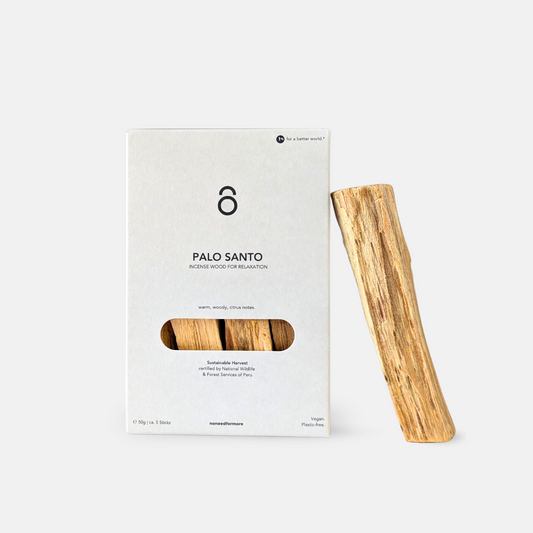
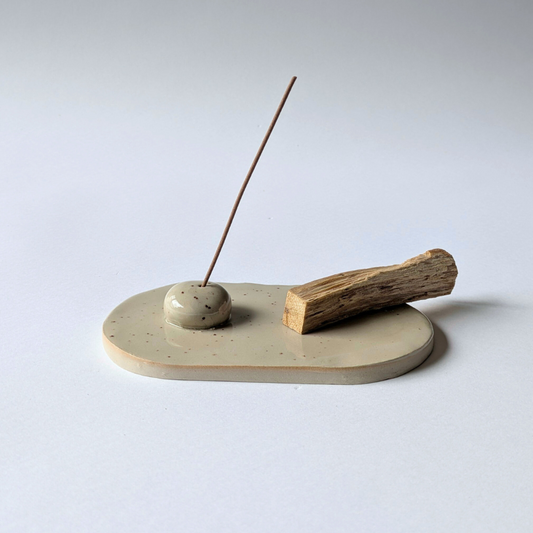
- Incense — Japanese Incense Sticks & Palo Santo — A consistent scent ritual anchors your nervous system. The same fragrance before every session trains your mind to settle faster over time.
- Yoga Bolsters — Ideal for body scan meditation, restorative floor practice, or any lying-down technique. Also perfect for winding down before a bed meditation session.
The best practice is a simple one, done regularly. Start with whichever technique resonated most from this guide — and give it at least two weeks before deciding whether it's right for you.