
What Is Palo Santo?
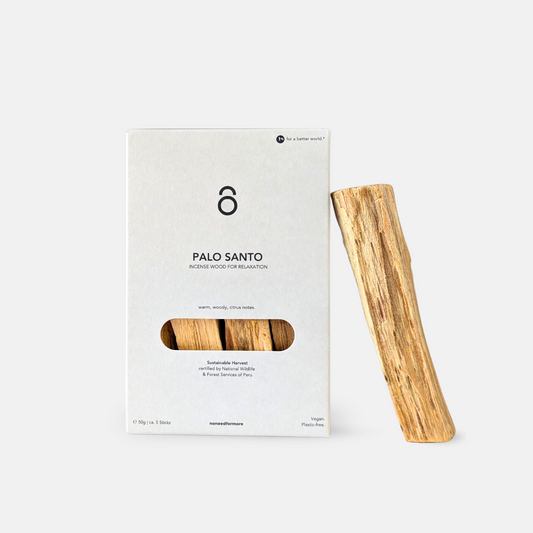
Palo Santo (Bursera graveolens) is an aromatic wood from the dry forests of Peru and Ecuador — the name translates to "holy wood." It belongs to the same plant family as frankincense, myrrh and copal, the classic resin incenses, and shares their distinctive warm, resinous scent when it smoulders.
What sets it apart is how it forms: Palo Santo only develops its fragrance after the tree has died naturally. The fallen branches have to dry on the forest floor for at least four years — and during that time the essential oils and aromatic resins concentrate in the wood. Fresh or prematurely harvested wood simply doesn't have that depth.
South American Indigenous peoples have burned Palo Santo for centuries in ceremonies, healing rituals and prayer. Today it has found its way into living rooms worldwide — as a natural room fragrance and a conscious moment to pause.
Palo Santo Benefits — What Happens When You Burn It?
Palo Santo Benefits — What Happens When You Burn It?
As it smoulders, Palo Santo releases a warm, layered scent: woody and earthy at the base, with subtly sweet notes and a hint of coconut. Milder and more nuanced than most conventional incense sticks. That scent comes from the essential oils in the wood — and one of their main components is limonene.
What is limonene?
Limonene is a monoterpene (C₁₀H₁₆) — the same aromatic compound that gives citrus fruits like oranges and lemons their scent. It's one of the characteristic aroma compounds in Palo Santo and the reason for the faint citrus brightness that runs beneath the warm, woody notes.
What happens when you breathe it in?
Aroma molecules work through a direct route: they bind to scent receptors in the nose and send signals to the olfactory bulb, which connects directly to the limbic system — the part of the brain that governs emotion and memory. This is why scent can affect our mood so quickly and involuntarily.
What does the research say about limonene?
Limonene is an active area of study. In animal studies, it showed an anti-anxiety effect linked to the regulation of dopamine and GABA in the brain (Song et al., 2021, Phytomedicine). In a separate mouse model, limonene showed an antidepressant-like effect associated with reduced inflammation in the brain (Lorigooini et al., 2021).
Important context: these findings come from animal models in which limonene was administered — not burned as incense. They don't transfer directly to burning Palo Santo at home. But they explain why limonene is scientifically interesting, and why Palo Santo is traditionally associated with calm and clarity.
Let's be honest: burning means smoke. Palo Santo is wood that burns, and all smoke contains particulates. Burn it in a well-ventilated space, and use Palo Santo as what it is — a conscious ritual for specific moments, not a constant room fragrance. Please make sure to open a window and ventilate after use.
Common uses:
- As an evening ritual — to mark the shift from day to rest
- During yoga and meditation — to set an intention and deepen focus
- To refresh the air in a room — a natural alternative to synthetic fragrance sprays
A note: Palo Santo is used traditionally, not medicinally. We make no health claims. But the ritual of lighting it, pausing, and breathing is a genuine moment of mindfulness in itself.
How to Burn Palo Santo Properly
How to Burn Palo Santo — Step by Step
To burn Palo Santo, light one end, blow out the flame after a few seconds, and let the smouldering stick carry the smoke through the room. One stick lasts for 20–30 uses. Here are the details that make the difference:
Step 1 — Light it. Hold one end of the stick in a candle flame for about 10–20 seconds until it catches. A candle works better than a lighter — the steady heat activates the fragrant resin slowly and fully.
Step 2 — Let it smoulder. Let the stick burn for a few seconds, then gently blow or wave out the flame. The tip should glow and release a fine thread of smoke.
Step 3 — Spread the smoke. Move slowly through the room and let the smoke drift into every corner. If the stick goes out, just relight it.
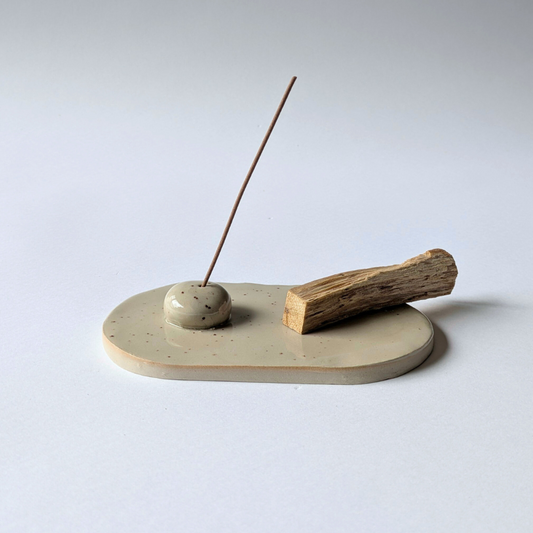
Step 4 — Set it down safely. Rest the stick on a fireproof surface — for example made of ceramics. Explore our handmade ceramic Palo Santo holders. The ember dies on its own after about 2–3 minutes.
Step 5 — Store and reuse. Keep your Palo Santo somewhere dry. Each stick lasts for 20–30 uses — simply relight it next time.
Palo Santo won't stay lit? It's almost always one of two causes. Either it was never fully lit. For this do light it over a candle flame, do not use a lighter because this will take forever. Keep it in the flame for at least 10 seconds. Or the flame was blown out too soon — hold it in the flame longer and let it burn properly for a few seconds before extinguishing.
Tip: Palo Santo and meditation pair well. Light it before your practice, let the scent fill the room, set it down safely, and begin. Combined with a quiet place to sit, it creates a dense, grounding atmosphere. Find our favourite yoga accessories such as bolsters and cushions here.

Buying Palo Santo — How to Recognise Quality
Buying Palo Santo — How to Recognise Quality
Not all Palo Santo is equal — quality varies with origin, resin content and ageing. Three things to check: look for visible resin lines in the wood (this is what carries the scent — low-resin sticks barely smell when burned), confirm it comes from naturally fallen wild Bursera graveolens aged several years, not young plantation wood, and make sure it's SERFOR-certified — Peru's official forestry authority, your only guarantee the wood was legally and sustainably harvested. Our Palo Santo carries this certification — more on choosing quality in the shop.
Is Palo Santo Sustainable?
This is an important question — and the answer depends entirely on sourcing.
Wild Bursera graveolens trees are protected in Peru. It's illegal to cut living Palo Santo trees. The SERFOR system ensures that only naturally fallen wood is harvested, and exporters must prove compliance through a strict chain-of-custody process.
Our Palo Santo comes from certified producers in Peru who follow these practices: only dead wood is collected, multiple trees are planted for every one harvested, and indigenous communities are directly involved in and compensated for the work.
When you buy SERFOR-certified Palo Santo, you're supporting a system that protects the forest and the people who depend on it. When you buy uncertified Palo Santo, you have no way of knowing.
Palo Santo vs. Incense Sticks — Which One Is Right for You?
Both create a fragrant atmosphere, but the experience is different:
Palo Santo is raw wood. You light it, it smoulders for 2–3 minutes, and you actively carry the smoke through your space. The scent is intense and immediate — warm, woody, present. It's a ritual that asks for your attention. Find our Palo Santo here.
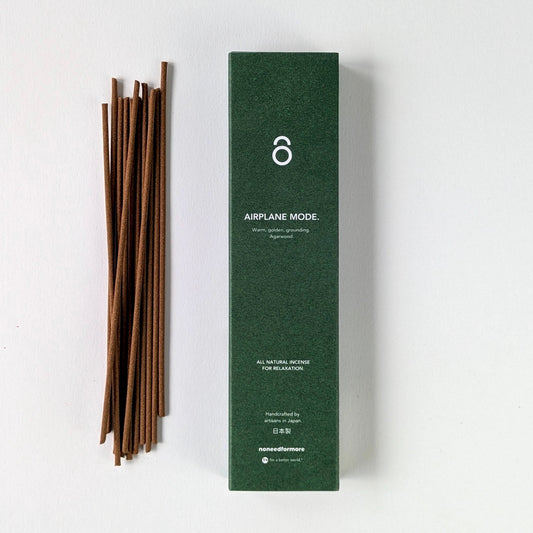
Incense sticks — like our Japanese incense, handcrafted since 1850 — burn for 25 minutes as a quiet background fragrance. They're made from pressed plant materials with no bamboo core, producing very little smoke. Perfect for setting a mood while you work, read or unwind.
Many people use both: Palo Santo for active cleansing and intention-setting, incense sticks for sustained, subtle ambience. If you're new to both, our gift sets combine Palo Santo with Japanese incense and a handmade ceramic holder — everything you need to start.
Frequently asked questions about Palo Santo
What is Palo Santo?
Palo Santo (Bursera graveolens) translates as "holy wood" and comes from a tree native to the dry forests of Peru and Ecuador. When burned, it releases a warm, woody scent with subtle sweet and coconut notes. For centuries it has been used by indigenous peoples of South America for ceremonies and energetic cleansing — today primarily as a natural room fragrance and intentional everyday ritual.
What does Palo Santo smell like?
Warm and woody, with subtle sweetness and a hint of coconut. The scent is grounding and calming — gentler and more complex than classic incense sticks, but more immediate and intense than a diffuser oil. The first moments after lighting are the most powerful; once set down, a softer, lingering note fills the room.
How do I tell good Palo Santo from poor quality?
Good Palo Santo has visible resin veins running through the wood — dark, slightly oily lines. Even unlit, you should be able to smell a faint warm fragrance when you hold it close. When burning, it produces a full, complex scent and glows evenly without going out constantly.
Poor quality Palo Santo has few or no visible resin veins, smells of almost nothing unlit, and burns quickly without releasing much fragrance. It typically comes from young trees or plantations where the natural ageing period of at least 4 years hasn't been observed. Another warning sign: no SERFOR certification — without it, there's no guarantee of sustainable harvesting.
Our Palo Santo is SERFOR-certified, sourced from naturally fallen wood with high resin content, purchased directly from certified producers in Peru.
What are the benefits of burning Palo Santo?
Palo Santo is traditionally used to cleanse spaces and create a calm, focused atmosphere. The wood is naturally rich in limonene — a terpene also found in citrus fruits, associated in studies with calming and mood-lifting effects. It's widely used as part of meditation and yoga practice, as an evening ritual and for general relaxation. We don't make medical claims — but the act of intentionally lighting it, pausing and breathing is a meaningful moment of mindfulness in itself.
How do I use Palo Santo correctly?
Hold one end of the stick in a candle flame for 10–20 seconds until it catches. Let it burn for a moment, then gently blow or wave it out. The stick should glow and begin to smoke. Move it through the room or rest it on a fireproof ceramic holder — the ember extinguishes on its own after 2–3 minutes. Each stick lasts for 20–30 uses.
Is your Palo Santo sustainably sourced?
Yes. Our Palo Santo is SERFOR-certified — SERFOR is Peru's national forestry and wildlife authority. The certification confirms that only naturally fallen wood is harvested. No living trees are cut. New trees are planted for every one collected. The indigenous communities involved in the process are directly included and fairly compensated. Without SERFOR certification, none of these guarantees exist.
How many times can I use one Palo Santo stick?
Each stick can be relit 20–30 times. Palo Santo doesn't burn through — it glows briefly and extinguishes on its own. Simply relight it next time you want to use it. Remarkably good value.
What's the difference between Palo Santo and incense sticks?
Palo Santo is raw wood burned directly — a short, intense ritual with an immediate, present fragrance. It asks for your attention: light it, let it breathe, move through the room, set it down. Japanese incense sticks burn for 25–30 minutes as a quiet background scent — light once, set down, forget. Many people use both for different moments: Palo Santo for active rituals, incense sticks for ambient atmosphere.
Do I need a holder for Palo Santo?
A fireproof surface is recommended to catch ash and safely rest the glowing stick. Our handmade ceramic holders are ideal — they work for both Palo Santo sticks and incense sticks, and are a beautiful object in their own right.